
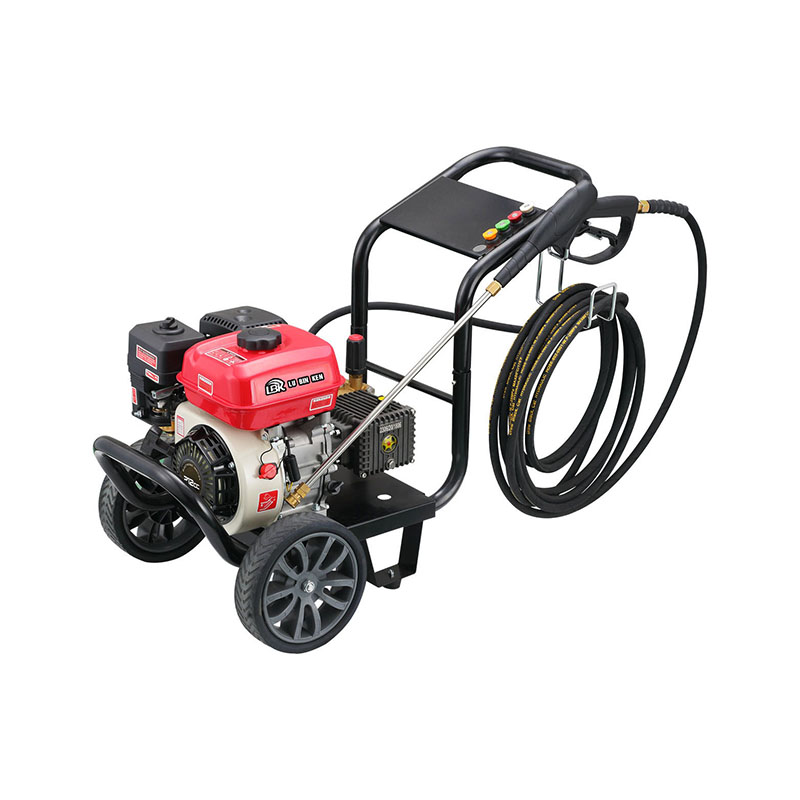
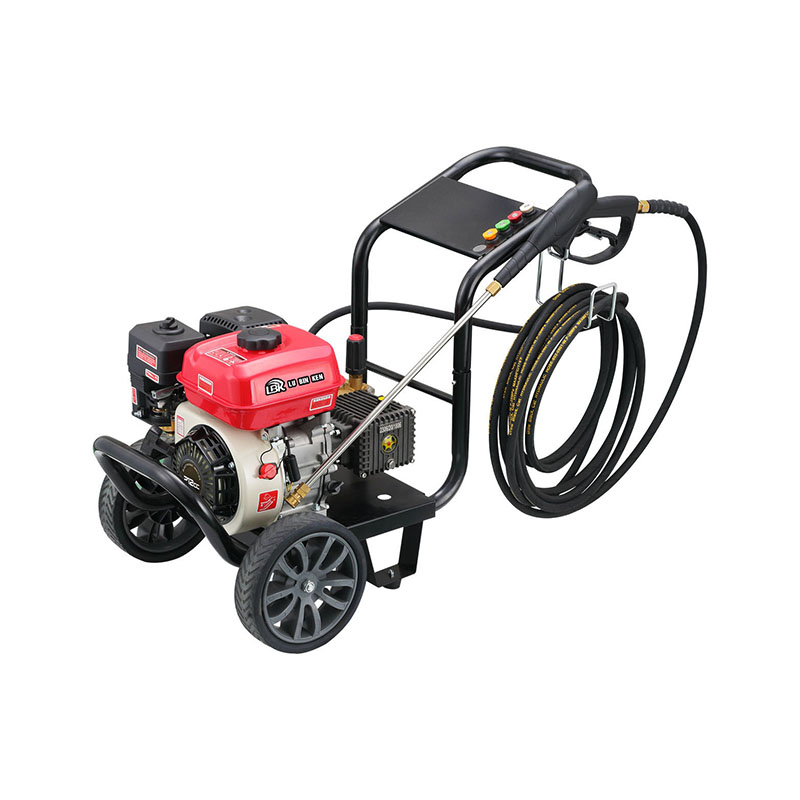
The PSI number on the box is marketing. The gallons per minute matter more. And neither one tells you whether the machine will still run on the third Saturday of spring when the driveway is half clean and the pump starts stuttering. A gasoline powered high-pressure washer lives or dies by components most buyers never check: the pump type, the unloader valve, the thermal relief.
Axial cam pumps are the entry-level standard. They spin at engine speed, run hot, and wear out fast. Fine for occasional deck furniture duty. Wobble plate pumps are a half-step up. Triplex plunger pumps are the benchmark—three ceramic-coated pistons running slower in an oil-filled crankcase with serviceable valves. A gasoline powered high-pressure washer built around a triplex pump is maintainable. One built around an axial pump is a disposable tool.
Check the pump oil after break-in. Milky oil means water pushed past the seals. Ceramic plungers resist scoring. Stainless steel check valves resist pitting. Alloy pistons and plain steel valves do neither. A gasoline powered high-pressure washer factory that specs ceramic and stainless understands the water chemistry problem. One that ships untreated alloy is cutting the one corner that guarantees early failure.
The unloader valve controls pressure when you release the trigger. It diverts water back to the pump inlet. A sticking unloader causes a pressure spike, deadheads the pump, and blows a seal or cracks the housing. Unloaders need bench testing before assembly. A factory that skips this step is shipping a gamble.
The frame absorbs engine and pump vibration at full throttle. Thin-wall tubing with spot welds cracks at the handle joint and pump mounting plate. Look for continuous weld beads and a base plate thick enough that pump bolts won't ovalize the holes. Powder coating hides rust for a season. After that, the seams tell the truth.
The high-pressure hose is a wear item but material choice determines how fast it wears. Thermoplastic is stiff, cheap, and kinks permanently. Rubber with braided reinforcement stays flexible in cold weather and survives being driven over. Quick-connect fittings should be brass. Plastic QCs crack under pressure cycling. The inlet strainer needs to be accessible for cleaning, not buried inside the pump housing where nobody reaches it.
The spray gun needs a trigger lock usable with wet, soapy hands. The wand should be stainless or chrome-plated steel. Bare steel rusts; rust particles clog the nozzle. Nozzle tips should come colour-coded with a chart showing actual orifice size and flow rate. "Red is zero degrees" is not a specification.
When the trigger is off, the unloader recirculates water through the pump in a closed loop. The water heats up every second the engine runs. After a few minutes it's hot enough to melt seals and plastic internals. A thermal relief valve opens at a set temperature and dumps the hot water. It costs very little to add. Many budget machines omit it.
A gasoline powered high-pressure washer factory that installs thermal relief as standard knows users leave machines idling while moving equipment. One that skips it bets the pump survives. The pump never wins that bet.
Direct-drive pumps bolt to the engine shaft and spin at engine speed. Simple, light, fast-wearing. Belt-drive systems use pulleys to reduce pump speed. Slower pump speed means less heat and longer seal life. Belt-drive machines are heavier, cost more, and almost always commercial-grade. A gasoline powered high-pressure washer factory offering both knows the market split. One selling only direct-drive is selling to homeowners who use the machine twice a summer.
Run the machine for an hour, cycling the trigger every few minutes. The pressure should snap back instantly each time. Feel the pump housing—warm, not scorching. Check for oil leaks at the pump shaft and engine crank seals. Let the machine idle with the trigger off for three minutes. The thermal relief should open before the pump gets too hot to touch. Inspect the hose for kinks at the fittings. After cooldown, open the pump oil. Milky oil means failed seals.
A gasoline powered high-pressure washer factory that has done its own endurance testing ships a machine that runs out of the box and keeps running. One that hasn't ships a machine that impresses on the first driveway and disappoints on the third. The difference is never the peak PSI. It's the pump oil, the unloader, the hose ends, and the tiny brass valve that dumps hot water on the ground before anything melts.



 No. 532 Xin Street, Xinqiao Town, Luqiao District, Taizhou City, Zhejiang Province
 [email protected]
 +86-13656559509
Copyright © Taizhou Lubin Electromechanical Co., Ltd. All Rights Reserved.



 EN
EN English
 русский
 عربى
عربى