
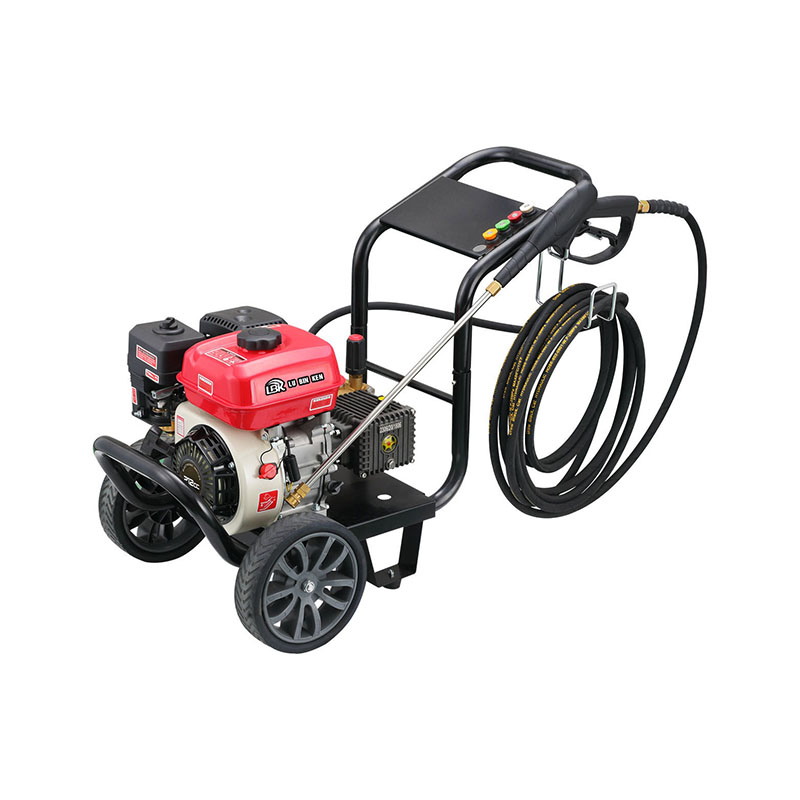
A garden hose rinses. A pressure washer strips. Mud-caked tractor tires. Moss-slick driveways. Graffiti on brick. A gasoline powered high-pressure washer pulls water from a bucket or a tap, pressurizes it behind a piston pump, and fires it through a nozzle at pressure high enough to peel paint off wood. No power cord. No outlet required. The gas engine runs anywhere. Here is what equipment rental yards, contractors, and hardware retailers need to know about the machine that turns water into a cutting tool.
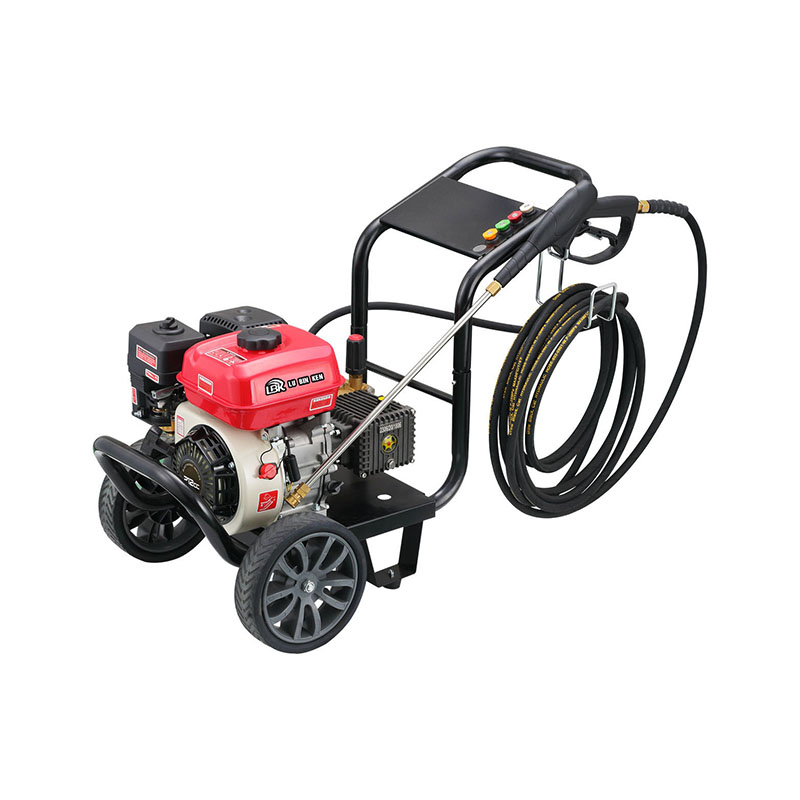
The pump is the heart. A gasoline engine spins a crankshaft. That crankshaft drives pistons inside a pump head, usually three pistons in an axial or triplex arrangement. Each stroke pulls water in through an inlet valve and pushes it out through a discharge valve. A gasoline powered high-pressure washer pump made from forged brass or stainless steel handles the pressure cycles. Aluminum pumps cost less and wear faster, especially with hard water or extended run times.
Pressure rating and flow rate work together. A machine rated at 3000 PSI with a flow of 2.5 gallons per minute does real cleaning work. High pressure with low flow blasts a narrow stream that cuts dirt but covers little area. High flow with moderate pressure moves more water and rinses faster. A gasoline powered high-pressure washer matched to the job balances both numbers.
The unloader valve protects the pump. When the trigger gun closes, the pump keeps running. Without an unloader, pressure spikes and blows seals or bursts the pump housing. A gasoline powered high-pressure washer with a thermal relief valve adds another layer of protection. If water inside the pump head overheats during bypass, the thermal valve dumps the hot water before it damages seals.
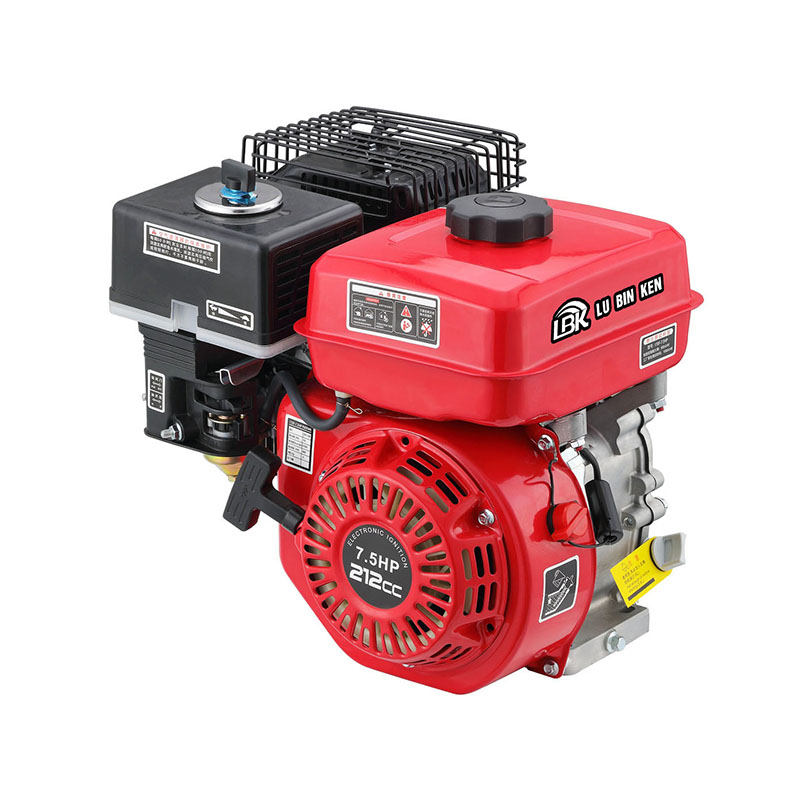
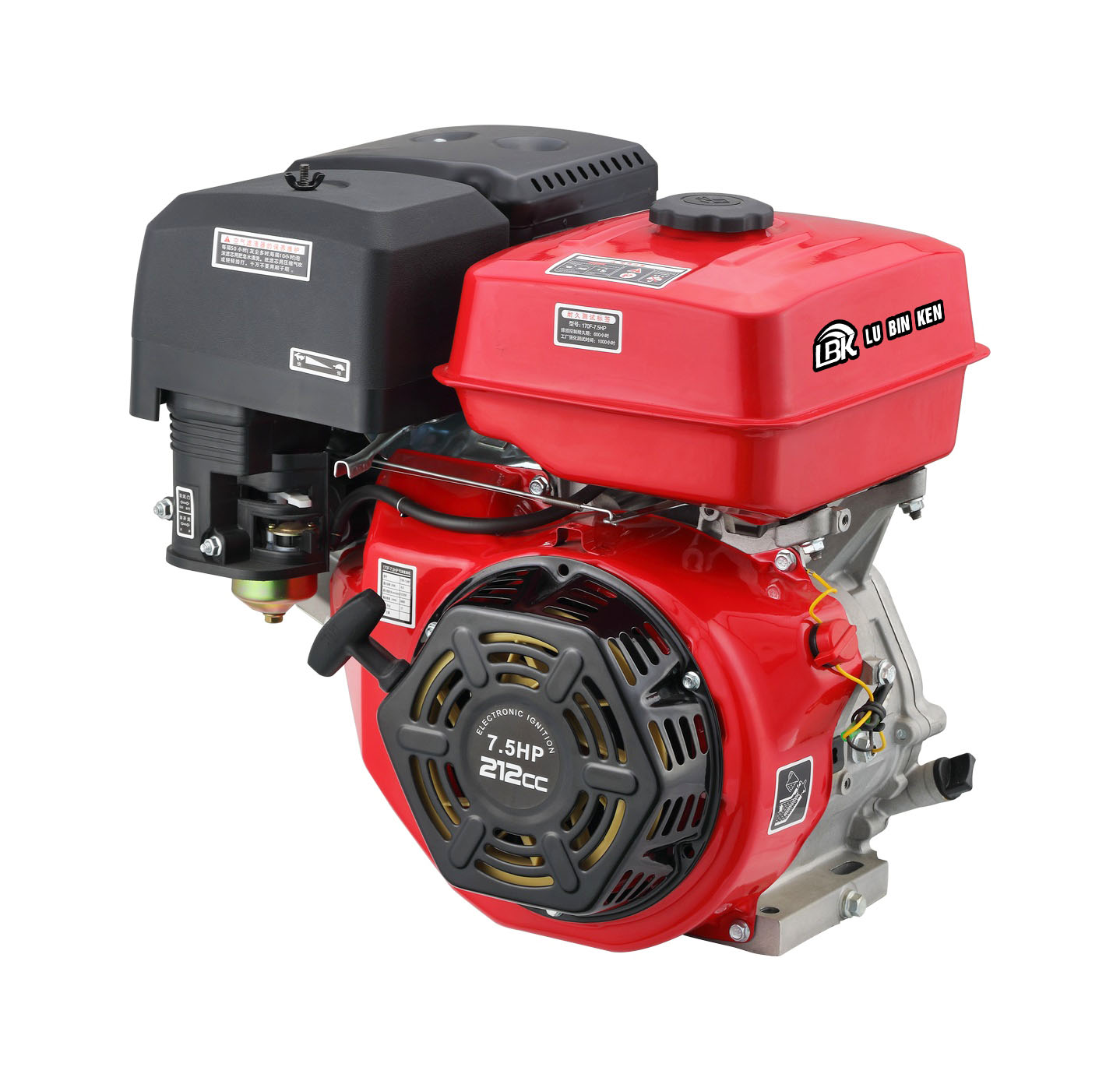
Gasoline engines on pressure washers are typically single-cylinder, air-cooled, four-stroke units. Honda, Briggs & Stratton, and Loncin patterns dominate the market. A gasoline powered high-pressure washer engine rated around 6 to 7 horsepower drives a pump capable of 3000 PSI. The engine has to produce consistent RPM under load because pump output depends directly on crankshaft speed.
Electric start adds convenience on larger units. A recoil start works on smaller engines but gets old fast on a cold morning. A gasoline powered high-pressure washer with a low-oil shutdown sensor protects the engine from running dry. An engine that seizes from oil starvation is a warranty claim and an angry customer.
Fuel capacity determines runtime. A tank that holds three to four quarts runs the engine for roughly two hours at rated load. A gasoline powered high-pressure washer with a large fuel tank and reasonable fuel consumption keeps the job moving without constant refueling stops.
The trigger gun and nozzle are the operator interface. Quick-connect nozzles let the user switch spray patterns instantly. A zero-degree nozzle fires a pencil jet for stubborn stains. A 25-degree nozzle handles general cleaning. A soap nozzle draws detergent from a siphon tube and sprays it at low pressure. A gasoline powered high-pressure washer that ships with a full nozzle set gives the user the right tool for every surface.
The high-pressure hose carries water from the pump to the gun. A hose rated at least twenty percent above the pump's maximum pressure handles pressure spikes without bursting. A gasoline powered high-pressure washer with a braided steel or reinforced rubber hose resists kinking and abrasion better than a thermoplastic hose.
The frame holds everything together. Welded steel tubing with a powder-coated finish survives being lifted in and out of truck beds. A gasoline powered high-pressure washer frame with rubber isolators between the engine and the frame reduces vibration that loosens bolts and fatigues welds. Flat-free tires roll over gravel and curbs without going flat.
Here is what a gas pressure washer built for daily use needs:
The pump oil gets ignored. A gasoline powered high-pressure washer pump has its own oil reservoir separate from the engine. Pump oil breaks down under heat and pressure. A machine with a sight glass on the pump lets the user check oil level and condition at a glance. A pump with no sight glass runs until the oil is gone and the bearings seize.
Winter storage kills pumps. Water left in the pump head freezes and cracks the housing. A gasoline powered high-pressure washer with a pump drain plug and clear winterizing instructions in the manual avoids the spring rush of frozen-pump warranty claims. A pump saver chemical treatment, a small can of antifreeze injected into the pump inlet, takes the process further.
A gasoline powered high-pressure washer works where electricity cannot reach. Construction sites before the temp power is connected. Remote barns and outbuildings. Fence lines running half a mile from the nearest outlet. Choose a machine with a triplex pump, a reliable engine, and a frame built for the truck bed. The water will blast the dirt off and the machine will start again next season. That is the whole reason to choose gas over electric.



 No. 532 Xin Street, Xinqiao Town, Luqiao District, Taizhou City, Zhejiang Province
 [email protected]
 +86-13656559509
Copyright © Taizhou Lubin Electromechanical Co., Ltd. All Rights Reserved.



 EN
EN English
 русский
 عربى
عربى